Build catalogue
Larry Lambert's 1974 TR-6 with GM P3400 V6 Conversion
britishv8.org
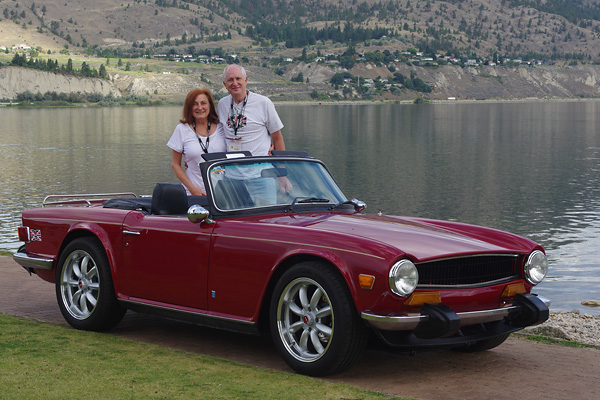 Photo: britishv8.org
A 1974 TR-6 rebuilt with a Pontiac Aztek GM P3400 V6
Larry Lambert had already upgraded his TR-6's original six-cylinder engine but hit diminishing returns, so in 2010 he worked with Bill Sinclair of British Restorations to swap in a GM P3400 V6 from a Pontiac Aztec. The compact, lighter V6 sits further back and lower in the frame than the original engine, and the car gained a Camaro-sourced T5 gearbox, a Nissan rear end, upgraded brakes, and a custom interior. The result is a car that looks stock but drives with far more power, agility and comfort than before.
Parts used
What the owner names in the write-up, grouped the way the Parts page groups them. Where one of the shops we index lists the same thing for this car, it is shown underneath with a link to the shop.
Shop suggestions are being prepared. The owner's parts list is available below.
Engine 1
- GM P3400 3.4L SFI V6 engineGeneral Motors
Replaced the Triumph inline-six; sourced from a Pontiac Aztec, retained stock heads, cam and valvetrain, with intake manifold flipped for forward-facing throttle body
Fuel & Ignition 2
- Aurora 8.5mm Super Mag Plus spark plug wiresAurora
Ignition wiring for the swapped V6
- AC Delco Ignition Control ModuleAC Delco
Controls the three dual-tower coil packs on the V6
Cooling 2
- Aluminum radiator (early Ford Mustang pattern)Ford (pattern)
Cools the V6 conversion, paired with an electric puller fan
- 16 inch electric cooling fan
Pulls air through the radiator, controlled by the ECM
Gearbox & Drivetrain 5
- Borg Warner T5 five-speed transmissionBorg Warner (Chevrolet Camaro)
Chevrolet-spec World Class T5 with 0.63:1 overdrive fifth gear, replacing the Triumph four-speed
- Chevrolet bellhousing and clutchChevrolet
Mates the T5 gearbox to the GM V6
- Custom built and balanced propshaft
Connects the T5 gearbox to the rear differential
- Nissan R200 viscous limited-slip differentialNissan
Rear differential with 4.11:1 ring and pinion
- Good Parts CV-jointed halfshafts and hubsGood Parts
Used with the rear suspension and differential swap
Suspension & Steering 4
- Quick ratio TR-6 steering rack
Retained at the front for sharper steering
- KYB shock absorbersKYB
Fitted front and rear for improved handling
- Good Parts rear suspensionGood Parts
Rear suspension upgrade paired with the differential swap
- Flaming River steering universal joints and intermediate shaftFlaming River
Used in adapting the steering column for the engine swap
Brakes 5
- Ford Mustang master cylinder with vacuum boosterFord
Upgraded braking system for the conversion
- Wilwood proportioning valveWilwood
Balances front/rear brake bias
- Electric line lock
Hydraulic brake lockout valve controlled from the shifter knob, currently disconnected
- Toyota front calipers with Honda drilled and vented rotorsToyota / Honda
Front brake upgrade
- Nissan/Infiniti rear calipers with Nissan drilled rotorsNissan/Infiniti
Rear brake upgrade
Wheels & Tyres 2
- Rota RB 17x7.5 aluminum wheelsRota
Royal Silver finish with polished lips
- Michelin Primacy MXMY P215/50R17 tyresMichelin
Fitted to the Rota wheels
Body & Trim 2
- Powder-coated front grille
Exterior trim finish
- Sikkens basecoat/clearcoat paintSikkens; painted by Jason Agostino, Mervyn's Body Shop
Applied in Triumph Carmine Red by the body shop
Interior 4
- Custom cherry dashboardDave Renner, Sinner Performance
Made to order for the car's interior
- Mountney leather wrapped steering wheelMountney
Interior upgrade
- 1971 Triumph TR-6 high-back seats
Modified with custom lumbar supports and electric heaters, extended driver track
- MG interior door pullsMG
Used in custom door trim panels
Electrical 7
- HID headlamps
Exterior lighting upgrade
- Dolphin electronic gaugesDolphin
Instrument cluster for the conversion
- Delco 130 amp alternatorDelco
Upgraded charging capacity for the V6 and electronics
- Motorcraft BXT-40R batteryMotorcraft
Battery fitted for the conversion
- Rostra Precision Controls cruise controlRostra Precision Controls
Cruise control computer, servo and stalk switch added
- Kenwood KDC-9017 stereo head unitKenwood
AM/FM/CD/satellite unit for the audio system
- MTX Thunder 4244 amplifierMTX
Powers the car's speaker system
Other 5
- Custom built headers
Ceramic coated to protect and retain exhaust heat
- 12 inch by 2.25 inch glasspack muffler
Part of the custom exhaust system
- 2010 Mustang GT 4.6L mufflerFord
Used in the custom dual exhaust setup
- Custom 2.25 inch stainless steel exhaust pipe
Carries exhaust from the headers to the mufflers
- Stainless steel dual exhaust tips
Finish the custom exhaust system
Photos
All 40 pictures in the write-up, in the order they were posted, shown from britishv8.org. A picture opens larger here, with the way through to the page it is on.
How it was done
A TR-6 that needed more
Larry Lambert bought this already-restored 1974 TR-6 in 2000 and immediately wanted more performance. He had the head milled 0.080 inch for higher compression and fitted a hotter camshaft, electronic ignition, and S.U. carburetors in place of the original Zenith-Strombergs, along with brake upgrades. By 2010 he felt he had reached the limit of what the stock inline-six could give him.
Choosing the V6
Working with Bill Sinclair of British Restorations, Larry settled on a 2001 GM P3400 3.4 litre SFI V6, originally from a front-wheel-drive Pontiac Aztec. Trial fitting showed the sixty-degree V6 could sit nearly seven inches further back and an inch lower than the old Triumph six, and it was about 170 pounds lighter, while still giving noticeably more power and torque.
Converting front-drive to rear-drive
To make the Aztec engine work in a rear-wheel-drive car, the team reversed the rotation direction of the water pump and alternator, and flipped the intake manifold so the throttle body faced forward. Stock throttle body, mass airflow sensor, fuel injectors, ignition and coils were retained. Custom ceramic-coated headers, a y-pipe, and a stainless exhaust with dual tips were built to suit.
Driveline and rear end
A Borg Warner T5 five-speed gearbox from a Chevrolet Camaro, with its 0.63:1 overdrive fifth gear and Chevrolet bellhousing and clutch, replaced the original four-speed. A custom balanced prop shaft connects to a Nissan R200 viscous limited-slip differential with 4.11:1 gears, running Good Parts CV-jointed halfshafts and hubs.
Suspension and brakes
The front end kept a quick-ratio TR-6 rack but gained KYB shocks, upgraded springs, sway bar, bushings and spindles. The rear uses Good Parts suspension with KYB shocks and reinforced differential mounts. Braking was overhauled with a Ford Mustang master cylinder and booster, Wilwood proportioning valve, an electric line lock, Toyota front calipers on drilled Honda rotors, and Nissan/Infiniti rear calipers on Nissan rotors.
Interior and finishing touches
Dave Renner of Sinner Performance built a custom cherry dashboard, and the original high-back TR-6 seats were modified with lumbar supports and electric heaters, plus an extended driver's seat track. The car received Dolphin electronic gauges, a Kenwood stereo with MTX amplifier, power windows, and Sikkens basecoat/clearcoat paint in Triumph Carmine Red, finished by Jason Agostino at Mervyn's Body Shop.
On the road
The conversion was completed in September 2012 and the car had covered about 8000 miles by April 2014, returning around 35 mpg while still being quick. Larry and his wife Patricia have driven it to Triumph gatherings including Triumphest 2012 in Flagstaff and Triumphest 2013 in San Rafael, where it took 2nd place in the Vintage Triumph Register's Modified Prepared class.
A summary in our own words. The full account, with all its detail, is the owner's: read it at britishv8.org ↗
Worth knowing
- Trial-fit an engine before committing, since the V6's compact size allowed it to sit lower and further back than expected.
- Converting a front-wheel-drive engine to rear-wheel-drive use requires reversing water pump and alternator rotation.
- Flipping the stock intake manifold let the throttle body face forward without needing custom fabrication.
- Mixing parts from several makers, Toyota, Honda, Nissan, Ford, Chevrolet, can solve brake and driveline needs economically.
- Discard unnecessary emissions hardware, such as the EGR valve, once the engine is out of its original application.