Build catalogue
Chris Oliver's 1970 GT6+ Roadster
 britishv8.orgas recorded by Dan Masters, British V8
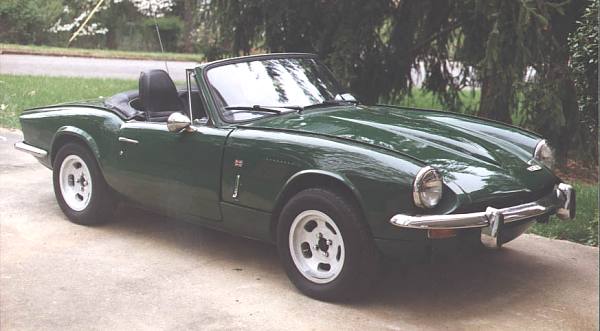 Photo: britishv8.org
A 1970 GT6+ rebuilt under a Spitfire body by Rob Stuart
This build grafts a late-model Spitfire body onto an early Triumph GT6+ chassis, keeping the GT6 running gear largely stock. Owner Chris Oliver, who bought the finished car in 1997, explains how the body swap works and what modifications the rotoflex rear end and driveline needed. It is a useful reference for anyone considering the same GT6-to-Spitfire body transplant.
Parts used
What the owner names in the write-up, grouped the way the Parts page groups them. Where one of the shops we index lists the same thing for this car, it is shown underneath with a link to the shop.
Engine 1
- Catch tank
Replaces the factory emission control valve
In the shops Polished Aluminium Oil Catch Tank ↗
 TRGB· £98.95 GBP
Fuel & Ignition 1
- Stromberg CD150 carburetors (Mark I GT6 spec)Stromberg
Fitted in place of stock carbs, fully adjustable, sourced from a Mark I GT6
In the shops Carburetor Dashpot Oil, 125ml (SU/Stromberg) ↗
 Moss Motors – Triumph TR6/TR250· $23.99 USD
 SU/Stromberg Short Screw ↗Moss Motors – Triumph TR6/TR250· $2.25 USD
 SU/Stromberg Ram Pipe Kit ↗Moss Motors – Triumph TR6/TR250· $100.00 USD
Gearbox & Drivetrain 1
- Triumph 4-speed gearbox with J-type overdrive
Believed to be a Spitfire gearbox mated to a GT6 bellhousing; frame and transmission rear crossmembers modified to fit it
In the shops Overdrive Harness, On Gearbox ↗Moss Motors – Triumph TR6/TR250· $21.99 USD
 Overdrive Switch (Gearbox Mounted) ↗Moss Motors – Triumph TR6/TR250· $14.75 USD
 Overdrive Gearbox Rear Annulus Bearing ↗Moss Motors – Triumph TR6/TR250· $7.25 USD
Suspension & Steering 3
- Rotoflex rear end
Retained rear setup requiring welded shock mounts and reinforced radius arm mounts
In the shops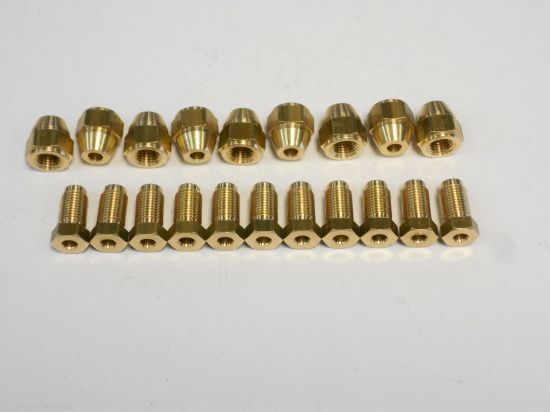 Brake Pipe Ends Kit (Brass, Rotoflex) ↗
James Paddock Ltd· £23.95 GBP
- KYB gas shocks (rear)British Parts Northwest
Modified GT6-spec shocks fitted to the rear, described as stiff
In the shops Rear Gas-a-just Shock by KYB ↗Moss Motors – Triumph TR6/TR250· $113.50 USD
 Spitfire, GT6, Herald & Vitesse Front & Rear Shock Bush ↗TRGB· £0.94 GBP
 Spitfire, GT6, Herald and Vitesse Rear GAZ Shock Absorber ↗TRGB· £197.89 GBP
 - Koni shocks (front)Koni
Currently fitted at the front, planned to be replaced with KYBs
In the shops Koni STR.T Front Shock, 1990-1997 ↗
 Flyin' Miata· $139.00 USD
 Koni STR.T Front Shock, 1999-2005 ↗Flyin' Miata· $149.00 USD
 Koni STR.T Front Shock (2006-2015) ↗Flyin' Miata· $169.00 USD
Brakes 1
- Dual-line brake master cylinder
Stock GT6+ brake setup, fits into a firewall recess specific to this body
In the shops Master Cylinder, Dual Line System (Aftermarket) ↗Moss Motors – Triumph TR6/TR250· $0.00 USD
 Master Cylinder (Large Cap, Dual Line, Aftermarket) ↗Moss Motors – Triumph TR6/TR250· $49.99 USD
 Brake Master Cylinder - Dual Line ↗Moss Motors – Triumph TR6/TR250· $153.00 USD
Interior 1
- TR6 oil pressure gauge
Fitted to the GT6 dash in place of the eyeball vent location
In the shops Oil Pressure Relief Valve (TR6, Spitfire, GT6, MG Midget 1500) ↗
 bpnorthwest.com· $7.89 USD
 Oil Pressure Relief Spring (TR6, Spitfire, GT6, MG Midget 1500) ↗bpnorthwest.com· $1.89 USD
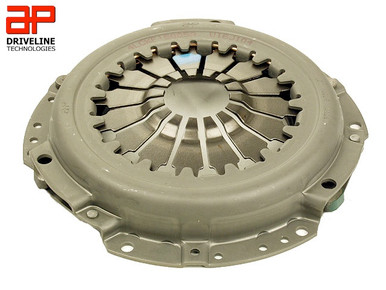 Clutch Pressure Plate (TR4A/TR250/TR6/TR7/GT6) ↗bpnorthwest.com· $153.24 USD
Electrical 1
- Voltmeter
Fitted to the dash alongside the oil pressure gauge
Photos
All 5 pictures in the write-up, in the order they were posted, shown from britishv8.org. A picture opens larger here, with the way through to the page it is on.
How it was done
Origins of the swap
The car began life as a 1970 GT6+. Around 1985, when the GT6 was reaching the end of its usable life, builder Rob Stuart began fitting a later Spitfire body onto the early GT6 chassis over the following couple of years. Chris Oliver, who tells this story, bought the finished car from Stuart in 1997 and does not claim credit for the build itself.
Body and doors
A late Spitfire body sits on the early GT6 chassis, with the early-style front end retained and judged to look reasonably correct. The car keeps its GT6+ doors and wing vents, which help cut wind buffeting at speed and can direct air into the cockpit. The one drawback is that the tonneau cover needs modifying to fit around these doors.
Engine and carburetion
The engine itself is left bone stock. The only changes are the carburetors, which are Stromberg CD150s sourced from a Mark I GT6 so that they are fully adjustable, and removal of the factory emission control valve, replaced with a catch tank.
Transmission and driveline
Drive goes through a Triumph four-speed gearbox with J-type overdrive, which Chris believes is a Spitfire box mated to a GT6 bellhousing, something he expects to confirm when the clutch eventually needs replacing. The hydraulics are GT6-spec, with the slave cylinder mounted on top. Both the frame and transmission rear crossmembers were modified to accept the J-type overdrive.
Rear suspension
The car runs a rotoflex rear end. Fitting this to the Spitfire-bodied chassis required welding shock mounts to the inner fender wells, and opening up and reinforcing the inboard mounts for the radius arms.
Brakes and firewall
Brakes are stock GT6+, using a dual-line master cylinder, and the body has a firewall recess to accept it. Chris notes this could be an issue for anyone fitting a single-line body, since that recess would not be present. A small firewall modification was also needed to clear the starter.
Advice for others attempting the swap
Chris describes the swap as fairly straightforward overall. Going with a non-rotoflex rear avoids the shock-mount welding entirely, and he mentions kits now exist that locate shock mounts on the frame instead. He also notes the handbrake cable guides need changing from GT6 tube to Spitfire tub, and suggests swapping the Spitfire body onto the GT6 frame is the easier direction, while mismatching body and bonnet styles can disguise a larger engine underneath.
How it drives
Chris reports the car drives well, though steering feels a little heavy at low speed, which he attributes to tire choice and width. The overdrive lets it cruise with traffic at around 3000 RPM. Ride quality is what he would expect of a Spitfire. The rear currently runs modified KYB gas shocks from British Parts Northwest, paired with stock springs and front and rear sway bars; Konis on the front are due to be swapped for KYBs.
A summary in our own words. The full account, with all its detail, is the owner's: read it at britishv8.org ↗
Worth knowing
- Fitting a Spitfire body to a GT6 chassis is fairly straightforward if you accept a few firewall and crossmember modifications.
- Keeping the rotoflex rear end means welding shock mounts and reinforcing radius arm mounts, which frame-mounted kits can now avoid.
- A single-line brake body will not have the firewall recess needed for the GT6 dual-line master cylinder.
- The handbrake cable guides need to be changed from GT6 tube to Spitfire tub for the swap to work properly.
- Mismatching body style to bonnet style can help disguise a bigger engine swap underneath.
- Tire choice and width can make the steering feel heavier than expected at low speeds.